
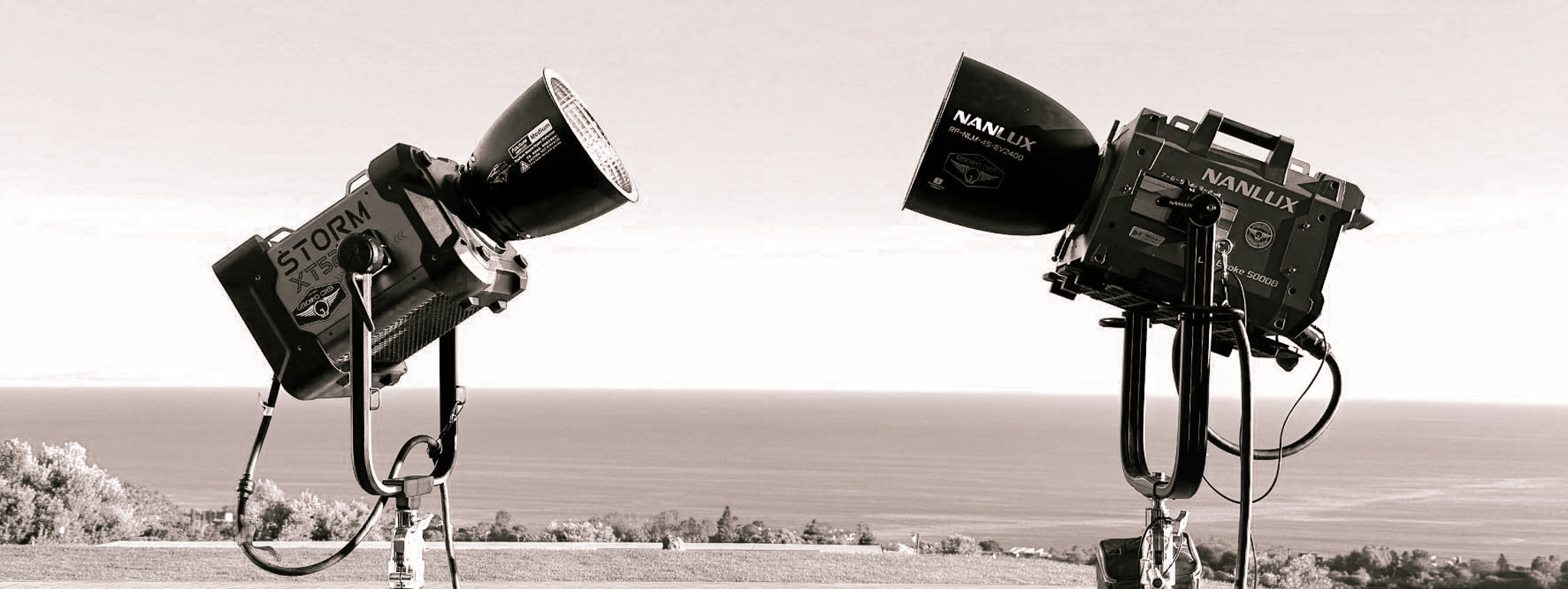
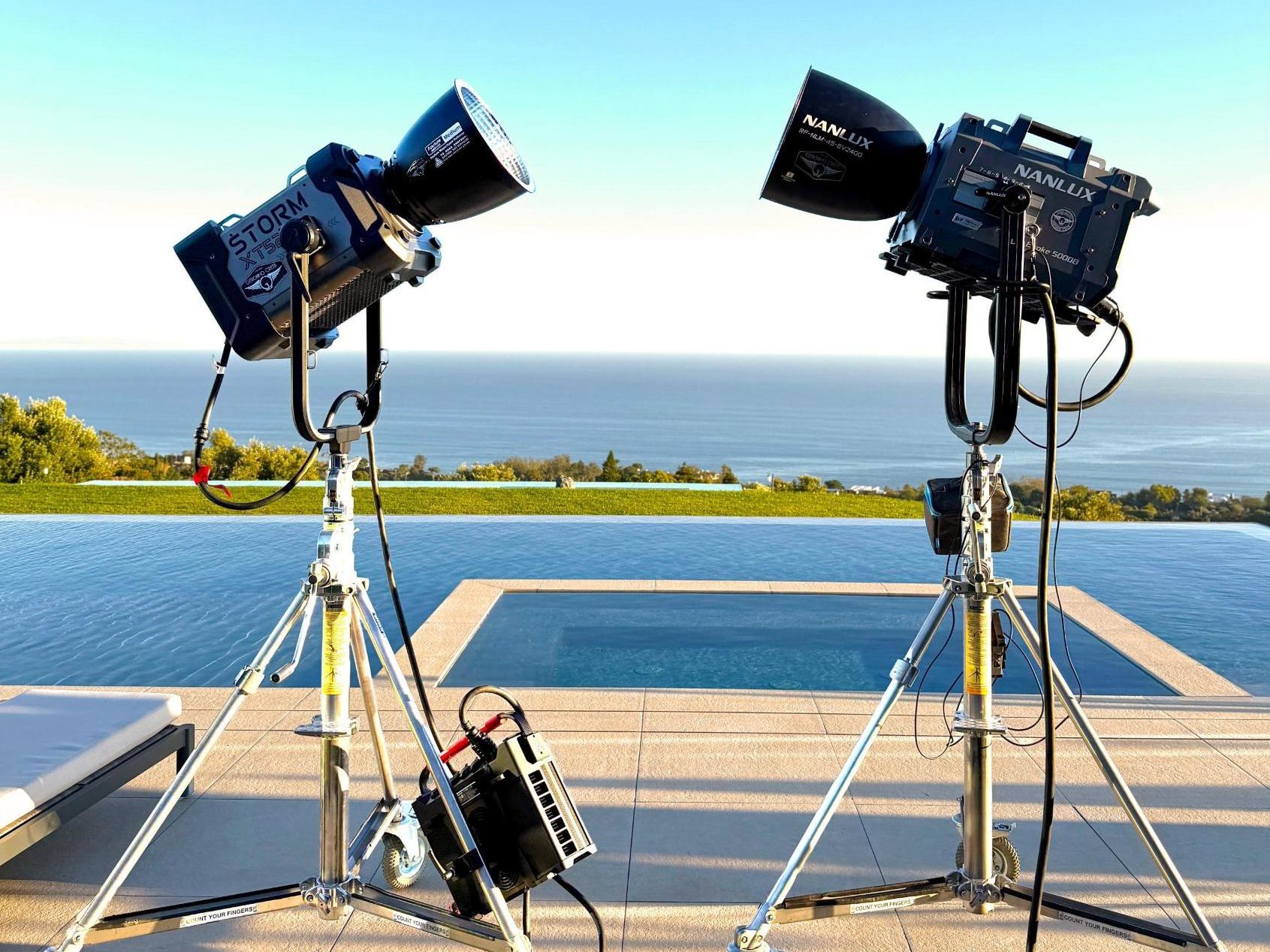
Over the past year, the transition from traditional, powerful HMIs to high-output LEDs has reached a significant milestone: there are now fixtures capable of competing with a 6K HMI while requiring only a fraction of the power. No tow plant, no heavy trunk line weaving through set. All you need is a Honda 7000is that could fit in the back of a pickup truck.
Two of the most prominent options currently available in the Los Angeles market are the Nanlux Evoke 5000B and the Aputure STORM XT52. Both fixtures represent substantial engineering achievements that all boil down to two key improvements over their HMI ancestors: control and ease-of-use.
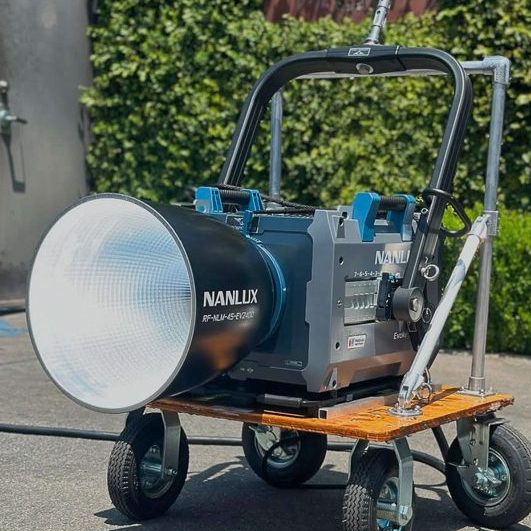
The Nanlux Evoke 5000B
The Nanlux Evoke 5000B is a natural evolution of the 1200B and 2400B product lines. It’s bigger, it’s bolder, and it’s still bi-color, with a color temperature range from 2700K to 6500K. With a CRI (that’s “Color Rendering Index”) of 97 the light quality is exceptionally clean, and the inclusion of now-standard green/magenta adjustment is a critical feature for matching existing location sources. Perhaps the biggest choice outside the chipset for this light is its engineering: the ballast and head are integrated into a single head unit. That means this beast is heavy. This is definitely a two-person (or liftgate) lift, whether you’re trying to mount it on a crank stand or condor. The good news is that the build is also extremely rugged, with an outstanding IP 66 rating. There’s a suite of attachments available for the 5000b, from your standard set of three cone reflectors, to a parallel beam reflector and motorized fresnel. All-in-all, this fits nicely within the overall Nanlux ecosystem.
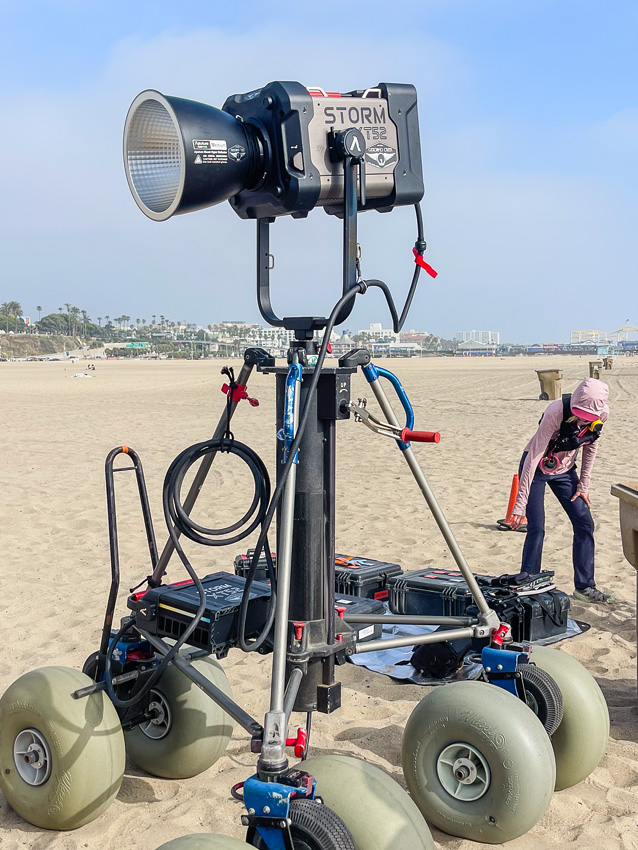
The Aputure STORM XT52
The Aputure XT52 goes in a different direction with full color rendition using their proprietary BLAIR chipset (that’s blue, lime, amber, indigo, and red). By moving beyond traditional bi-color diodes, it achieves a wider CCT range of 2500K to 10,000K. This provides additional flexibility when matching extreme ambient conditions, such as very cool daylight or warm candlelight. Unlike the 5000b, this unit has a ballast separate from the head, making its general design more in line with HMIs. This also means the head is noticeably lighter, though when lifting above head height you probably still need a second pair of hands. You have an ecosystem that echoes the Nanlux line (Aputure and Nanlux are direct competitors, so their lighting products oftentimes seem to mirror one another): fresnels, parallel beam reflectors, lanterns, and domes. Again, a nice addition to your other Aputures, or simply a very reliable “big gun” to keep by your side.
At-A-Glance Comparison
Here’s a quick and easy breakdown of the two units side-by-side:
| Feature | Nanlux Evoke 5000B | Aputure Electro Storm XT52 |
| Max Power Draw | 5000W | 5200W |
| Input Voltage for 100% Output | 100V to 240V | 220V to 240V |
| 110V Performance | Full Power (requires 60A circuit) | 50% Derated Output |
| CCT Range | 2700K to 6500K | 2500K to 10,000K |
| IP Rating | IP66 (Powerful Water Jets) | IP65 (Standard Water Jets) |
| Lamp Head Weight | Approx. 90 lbs | Approx. 61 lbs |
| Accessory Mount | NL Mount | Aputure Mount (Electronic) |
Practical Considerations
The Aputure XT52 is significantly lighter at the lamp head, which provides a distinct advantage when rigging on long arms or booms. The BLAIR chipset is designed for high color fidelity, and the Sidus Link integration provides a polished wireless control interface. Both fixtures allow for dimming a 5K equivalent source to 1% without color shifts or the need for physical scrims.
One operational consideration for the XT52 is the power requirement. To achieve 100% output, the fixture requires 220V power. When running on standard 110V power, the unit automatically derates by 50%. This means a power distribution package for the XT52 should include 100a/220V bates cabling and boxes. For those looking to run the XT52 on a 7k Honda generator, a custom adapter is necessary. We have manufactured these specific adapters and include them with our kits to ensure the light can be utilized at full capacity even on smaller mobile setups.
In contrast, the Nanlux 5000B is capable of full output on a 110V source, provided the circuit can handle the nearly 50A draw. This makes it a robust choice for crews already utilizing high-amperage 110V infrastructure. Its weight requires careful rigging considerations, but the IP66 rating makes it a primary candidate for harsh exterior environments.
Custom Mobile Solutions
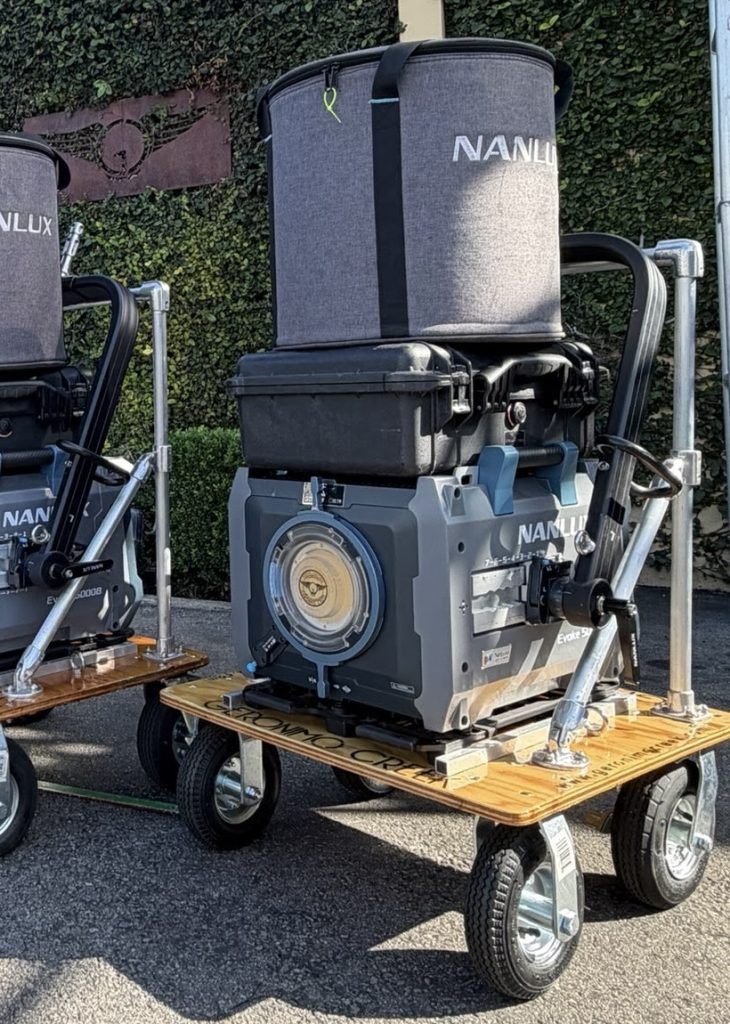
Custom storage solutions are often necessary to make these large LED systems truly production-ready. While the standard flight cases provided with these units offer protection during initial shipping, they are frequently impractical for the daily demands of a G&E truck or a Sprinter van. These oversized cases tend to be bulky, excessively heavy, and cumbersome to maneuver once on location. To address this, we design and manufacture custom carts specifically for both the Nanlux and Aputure systems. These carts are engineered with a significantly smaller footprint to maximize truck space. Equipped with 8 inch pneumatic wheels, they remain mobile on rough terrain and allow a single person to move the entire kit from the lift gate to the set with far greater efficiency than traditional road cases.
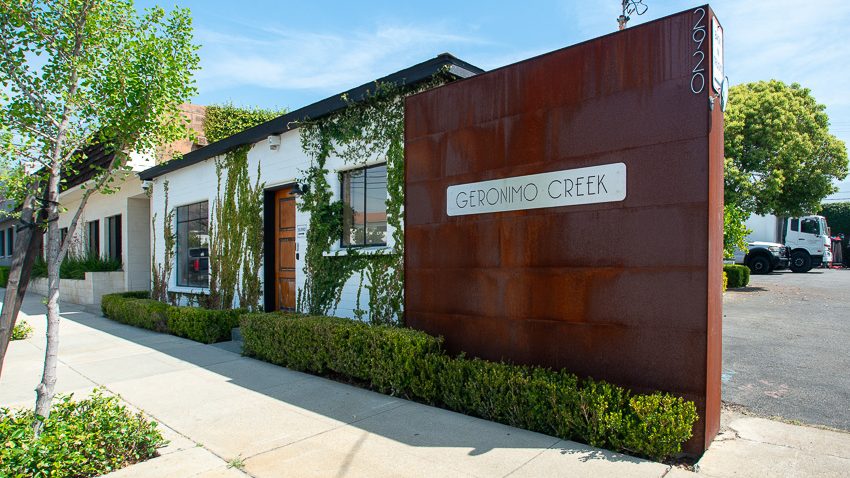
If you are in the neighborhood and want to see these units side by side, feel free to stop by Geronimo Creek. We always have the coffee on and love talking shop. We have both units available in our rental inventory if you want to take one out on your next project and see how it performs in the field.