In an industry currently dominated by the rapid evolution of LED technology, it is easy to overlook the traditional tools that have defined high-end cinematography for decades. While LED panels offer convenience and color control, there are certain physical qualities of light that digital chips struggle to replicate. At Geronimo Creek, we find that the combination of K5600 Kurve reflectors and HMI sources continues to be a primary choice for cinematographers who require a specific punch and texture.
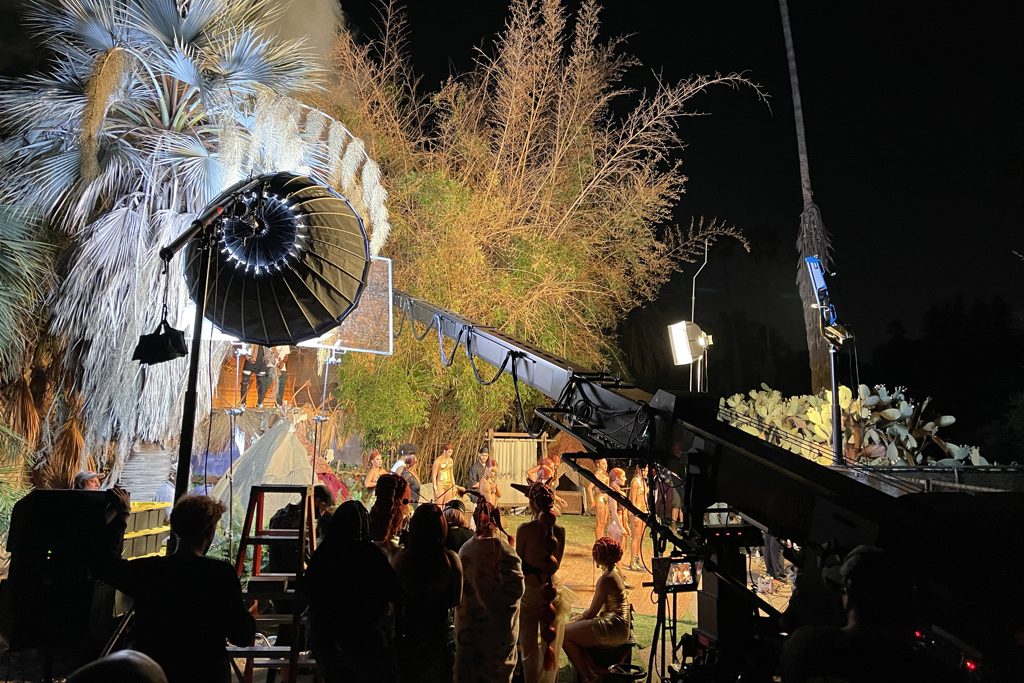
The Power of the Point Source
The primary advantage of using an HMI or Tunsten globe within a curved umbrella beauty light is the nature of the light source itself. LEDs are often comprised of hundreds of tiny light emitting diodes, which can create multiple micro shadows and a flatter overall quality. An HMI or tungsten bulb is a single, concentrated point of light. When placed inside a true parabolic shape like the Kurve, this single point allows for mathematical precision in how the light hits the silver interior and bounces toward the subject.
This creates a crispness that is difficult to find elsewhere. Even with the advent of high-output COB LEDs, the raw output and throw of a 1600W HMI remain superior for larger setups. When we need to compete with daylight through a window or fill a large exterior space, the efficiency of an HMI paired with a Kurve 7 provides a volume of light that most LED kits cannot match without becoming overly bulky or expensive.
Silver vs. White: Choosing the Interior Finish
A common point of discussion when selecting a Kurve or any large modifier is the choice between a silver or white interior. This decision often dictates the entire mood of the key light.
White Interior: A white interior acts as a natural blender. It absorbs more light and scatters it in multiple directions before it even leaves the reflector. This results in a much softer, more creamy fall-off. We reach for white when the skin texture needs to be minimized or when the scene requires a gentle, low-contrast wrap that feels more like natural window light than a controlled studio source.
Silver Interior: This is the standard for the Kurve and is preferred when the intent is to create a high-fashion or “Vogue” look. Silver is highly efficient and maintains the specularity of the light source. It interacts beautifully with makeup, adding a healthy sheen and “ping” to the skin that helps define bone structure. If the goal is a sharp, commercial aesthetic with deep blacks and vibrant highlights, silver is the appropriate choice.
Defining the Kurve
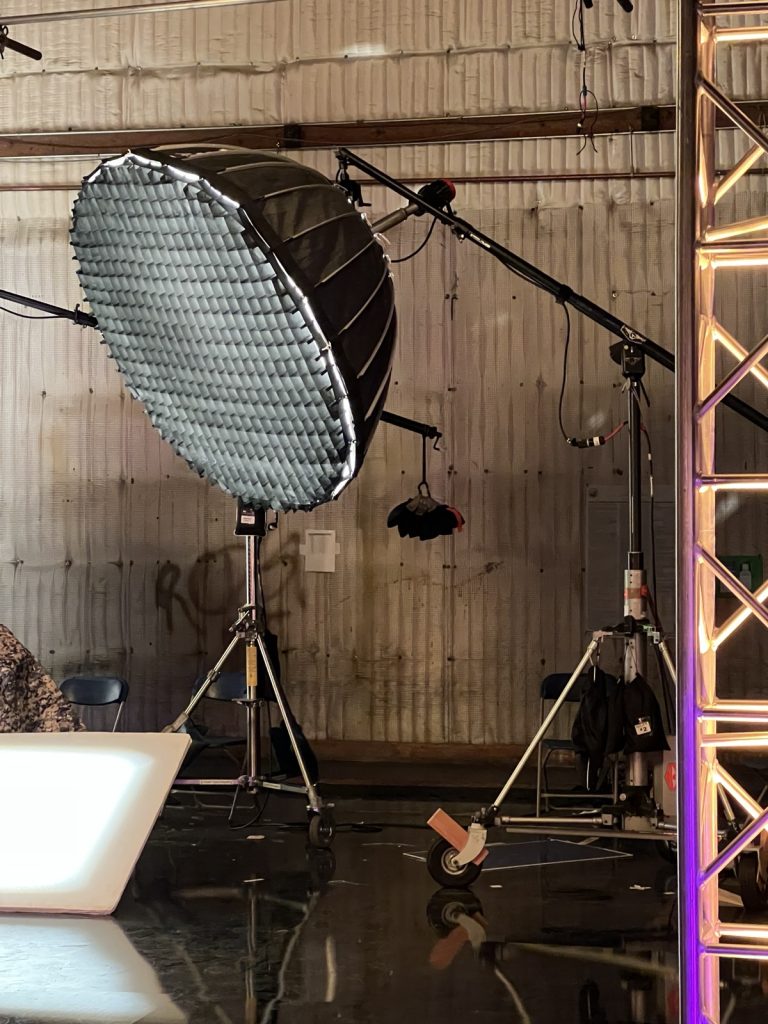
The Kurve series is available in several diameters, typically ranging from 2.5 feet to 7 feet. What makes them stand out is their true parabolic shape. Unlike a standard umbrella that simply scatters light, the Kurve uses a focusable mounting system. By moving the light source forward or backward along the central axis, we can transition from a broad, wrapping wash to a tight, punchy beam.
Key Features and Build Quality
One of the first things you notice about the Kurve is the construction. While some competitors use delicate materials that feel like they might tear on a windy day, K5600 uses a robust Nomex and Kevlar blend for the outer skin. This is a significant advantage in a rental environment or on a busy set where gear is constantly being moved.
- Patented Multi-Cam System: Setting these up is remarkably fast. You simply push and turn to lock the ribs into place. It eliminates the struggle of tensioning large modifiers manually.
- Soft Silver Interior: The interior finish is a matte silver rather than a mirror finish. This is an important distinction because it helps eliminate the harsh “rings” or shadow aberrations that can occur with more reflective surfaces. It produces a cleaner, more natural fall-off on skin.
- Versatile Focus Tubes: Every Kurve comes with focus tubes that are compatible with Joker 800 and 1600 heads, but they also include an alternate tube with a baby pin. This allows you to mount almost any fixture.
The Relevance of HMIs in a Digital Age

We often discuss the benefits of LED color mixing, but the spectral output of a high-quality HMI or tungsten globe still feels more natural to many veteran DPs. The Kurve enhances this by adding a certain sparkle to the shot. It provides a distinct, directional light that still manages to wrap around a subject, creating depth that flat LED lighting often lacks. It is particularly effective for beauty and fashion work where the goal is to highlight texture without losing the softness of the shadows.
While these units are substantial and require a sturdy stand and space to maneuver, the results are worth the footprint. They are not the tool for a cramped location, but when the quality of light is the priority, the Kurve and HMI combination remains a gold standard.
Proper Use with a Subject
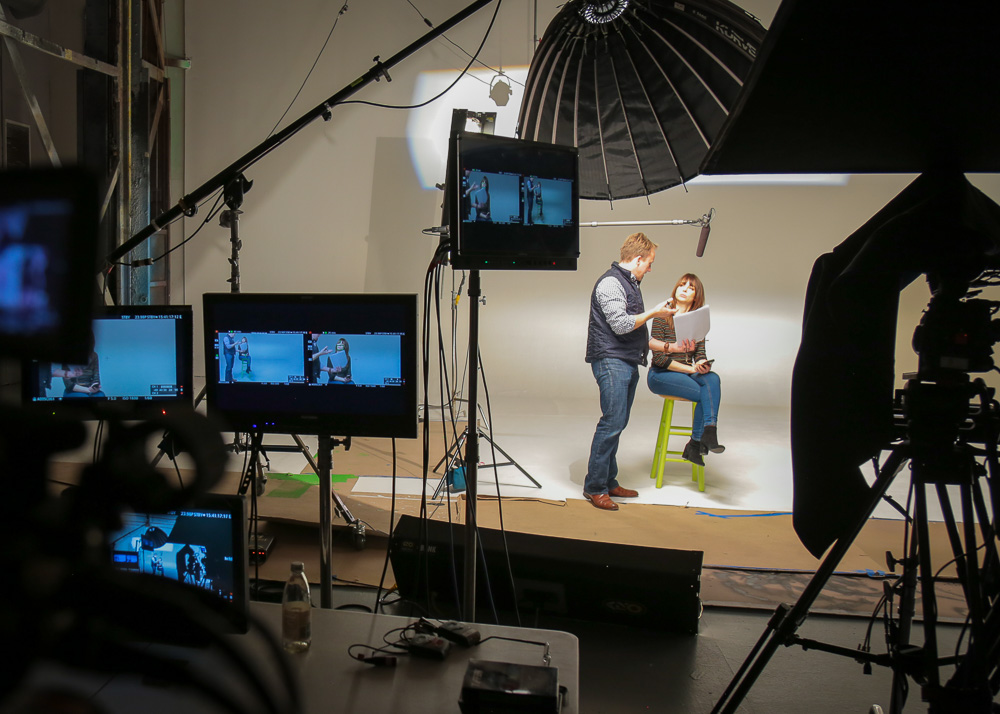
When we are lighting a subject with a Kurve, the magic happens in the focusing. We usually start with the light source deep inside the umbrella in the flooded position. This creates a very soft, large-source feel. As the light moves toward the outer edge, the beam becomes more parallel and high-contrast.
We often suggest using the provided diffusion for an even softer look, although many cinematographers prefer the raw silver for its character. Because the light is so directional, the Kurve can be placed further away from a subject than a standard softbox while still maintaining a beautiful, wrapping quality.
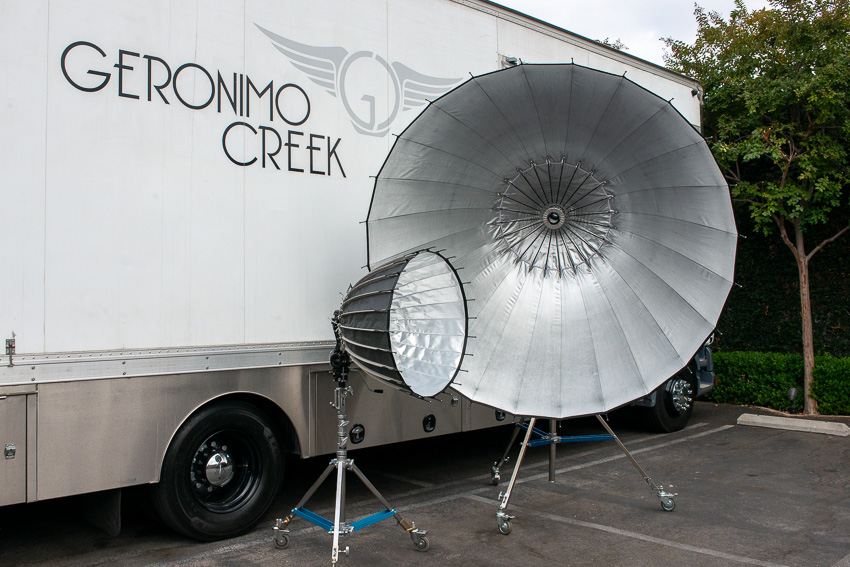
At Geronimo Creek, we maintain a large selection of Kurve umbrellas and K5600 HMI kits available for rent. Whether the job requires the compact 3 foot model for a tight portrait or the massive 7 foot version for a full-body setup, we can help find the right configuration. If you are curious about how these traditional sources compare to the latest LED options in your kit, feel free to stop by and we can walk through the setup together.